
Microsoft says attackers are using AI agent frameworks, naming one called ARTEX, to search public GitHub repositories for exposed secrets, such as passwords and keys, and then use them. In one case it saw, an agent went from searching GitHub for client secrets to pulling data out of an Azure Key Vault in five minutes.
Microsoft: an AI agent framework is hunting for leaked secrets on GitHub
In a post dated 5 November, Microsoft describes ARTEX as an "agentic AI offensive framework". It says the GitHub searches began in August 2026 and follow-on sign-ins using leaked or stolen application credentials began as early as 28 October. The post gives no total for victims. In a second post on 6 November, it says a Cambodia-based group it tracks as Storm-3358 began using ARTEX against financial organisations in October, mainly in Southeast Asia. Microsoft's advice includes removing secrets from code, rotating any that were exposed, turning on secret scanning and push protection, and moving apps to managed identities.
Why it matters: Microsoft says to treat a secret that was ever public as compromised, even after you delete it. Ask your developers whether a key was ever pasted into a public repository.
Amazon is reportedly building a home robot
CNBC reports that Amazon has formed a home robot team and is hiring for a "new-to-world robot product", based on its reading of job postings, including one since removed. Amazon bought Fauna Robotics, maker of the 3.5-foot Sprout humanoid, in March. CNBC says it is unclear what the robot is or what it would do. Some owners of its earlier Astro robot fear it will be discontinued. Amazon told CNBC it continues to support Astro customers.
Why it matters: nothing to buy or plan around yet. It does show a large company putting a team on household robots again.
Thinking Machines launches Inkling 2 Small, weights promised for this week
The company released the model on 5 November on its own Tinker platform. It has 594B parameters in total, 17B active, and accepts images but not audio. On 5 November the company said it would release the weights under an Apache 2.0 licence "next week", after external safety testing and red-teaming. As of this evening, its Hugging Face page does not list them.
Why it matters: an open licence would give a business more choice of where the model runs, though at this size many firms would pay a hosting provider. Wait until the weights are downloadable, then check the terms. Today's Insights post has a short checklist.
NVIDIA pitches its Vera CPU for AI agents
NVIDIA's blog says that in its own comparison for a 100-megawatt data centre, Vera handles 1.6 times more agents per watt than the fastest x86 CPU, and runs agents twice as fast as the most energy-efficient one. It says Perplexity ran agentic coding tasks 1.5 times faster on Vera than on traditional CPUs and plans to deploy it. The post does not name the x86 chips in that comparison or describe the method.
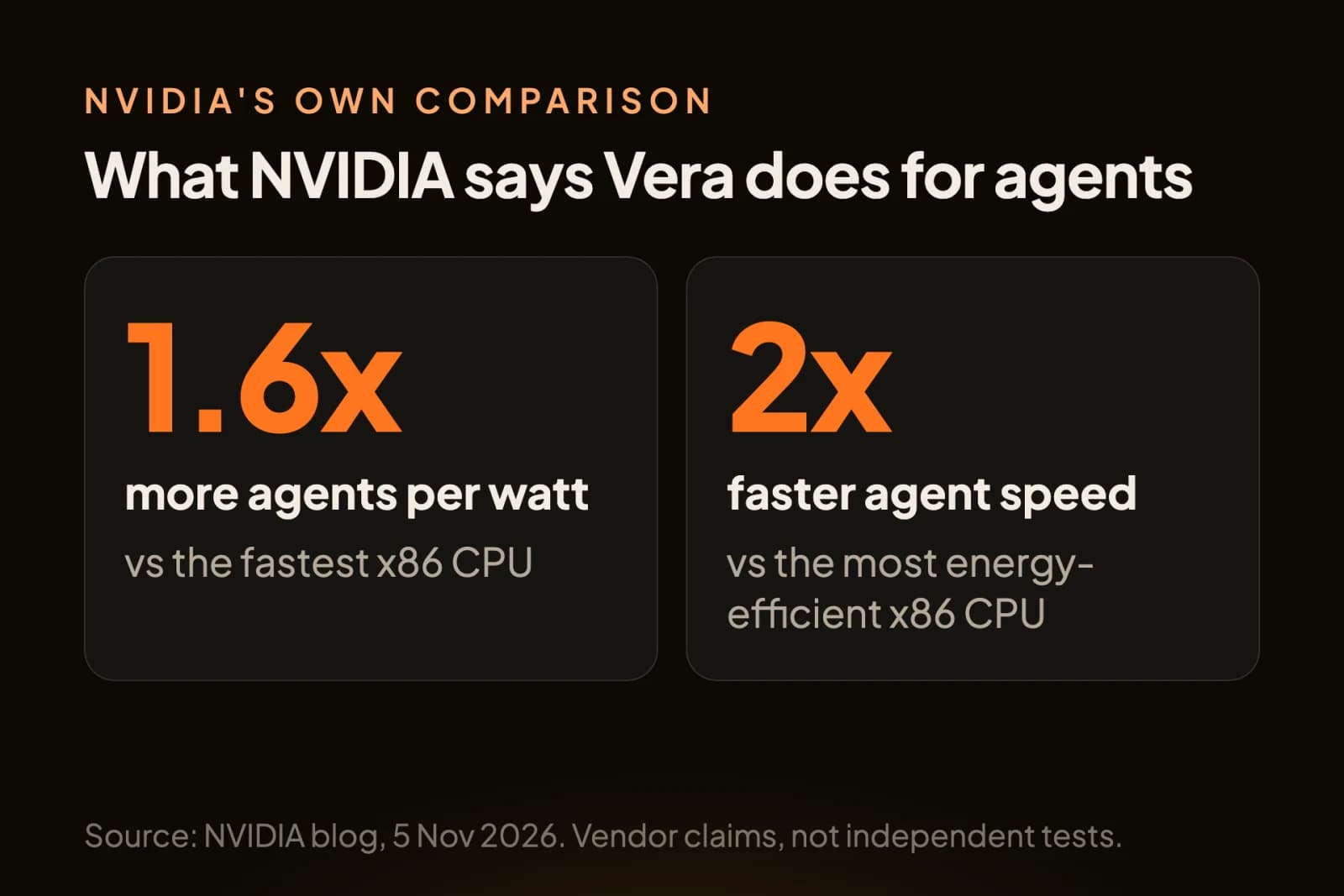
Why it matters: these are the vendor's numbers, not independent tests. Agents spend time on tools and databases as well as the model, so the chip around the model affects speed and cost.
MIT and NYU show a simulated robot that infers what you meant
A team at MIT and NYU has built FLEX, which uses a language model to widen a plain-language instruction. Told "don't spill on my laptop", a simulated robot arm learned to avoid electronics generally. It was tested only in simulation, and the article gives no success rate.
Why it matters: early research. The idea is that you state the goal and the system works out what else to avoid, which is what you would want from any AI doing a task for you.
Worth watching: whether Thinking Machines publishes the Inkling 2 Small weights this week as promised, and on what terms.
Arthat AI
Working on something similar at your company?
Arthat AI builds these automations for Indian businesses every week. If you want to talk through whether this fits your situation, we'll give you a straight answer — even if the answer is "don't build it."