Salesforce has agreed to buy Braze, the customer messaging platform used by brands like Canva and Instacart, for about $5.66 billion. Braze's AI helps marketers pick the content, offer, channel and timing for their messages.
Salesforce agrees to buy Braze for $5.66 billion
Salesforce said on 20 October that Braze shareholders will get $47.50 in cash per share, in a deal it values at about $5.66 billion. Braze has about 2,770 customers, including Canva, Instacart and Venmo, and its AI helps marketers choose content, offers, channels and timing. Salesforce says Braze should strengthen Marketing Cloud's cross-channel personalization and work alongside its Agentforce agents, and expects the deal to close in its fiscal year 2028, subject to approvals.
Why it matters: if your push, email and WhatsApp campaigns run on separate tools today, the big suites are racing to put them in one place where AI decides who gets what and when.
New York City proposes rules for AI customer service
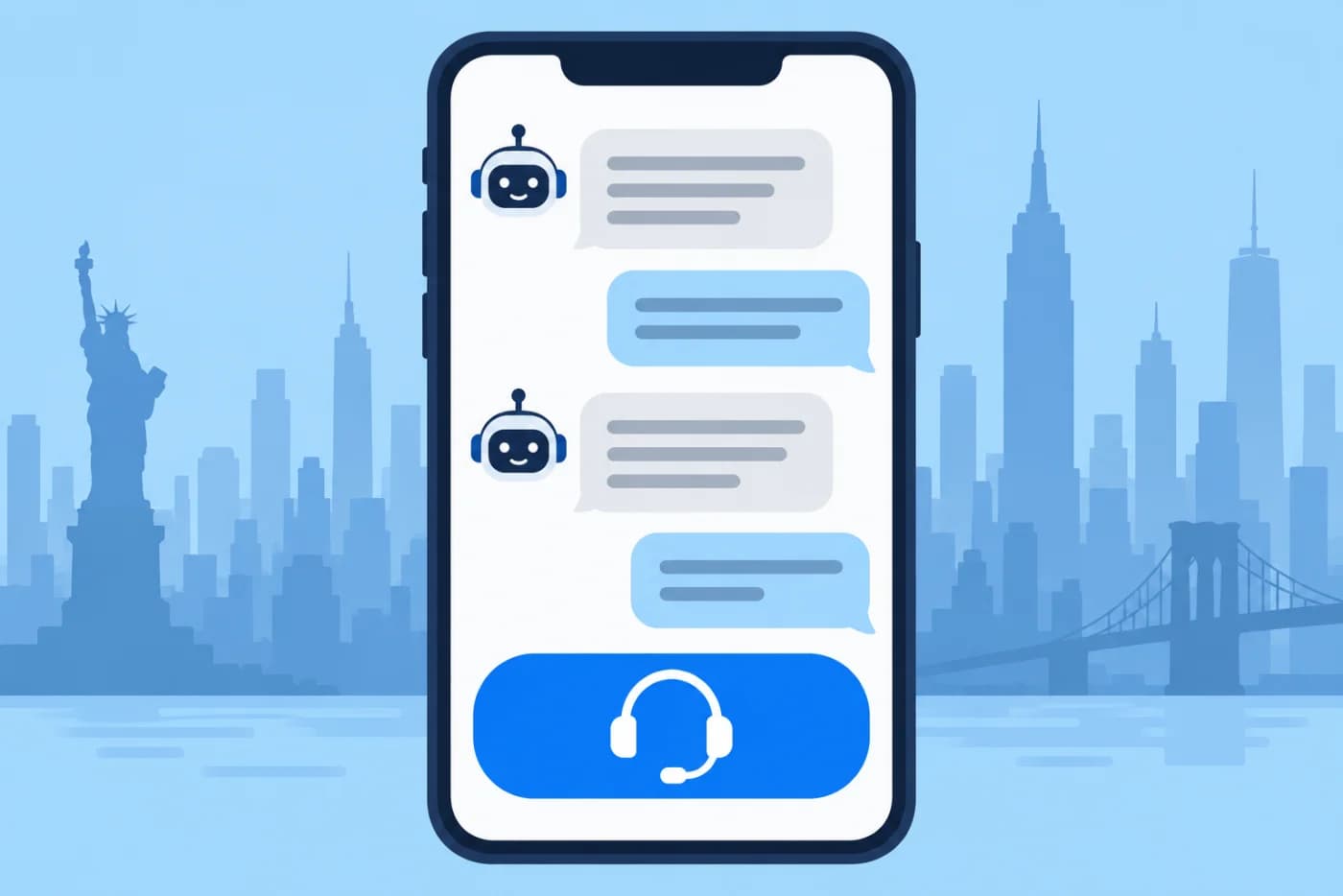
New York's consumer protection department proposed rules on 20 October that would make businesses tell customers when they're talking to an automated system and give them an easy way to reach a human. Companies also couldn't avoid responsibility for unlawful things their AI does. Fines start at $525, and there's a 30-day comment period with a public hearing before the rule is final.
Why it matters: "say it's a bot, and let people reach a person" is a sensible rule for any support bot, wherever you are, and it's cheaper to build in now than to add later.
Microsoft adds risk scores and kill switches for AI agents
In a Microsoft Security blog post on 19 October, the company described controls that keep reassessing each agent's risk. Depending on the score, policy can cut an agent to read-only, require a person to approve a consequential action, or stop it entirely. It can also find 60 types of agents running locally on staff computers, including Claude Code, OpenAI Codex and GitHub Copilot. Microsoft gave no release dates.
Why it matters: treat an agent like a new hire with system access: give it narrow permissions, and have a person sign off on anything that moves money or data.
OpenAI's API can now keep prompts cached for 12 hours
Developers using OpenAI's Responses API can now choose 12-hour prompt caching, so shared instructions, tools and context stay cached between requests made hours apart. Writing to this cache costs 2.5 times the normal input price, and later requests get the lower cached-input rate.
Why it matters: a support bot that sends the same long policy document with every question can now pay the higher price for it once and the cheaper rate on requests for hours afterwards.
Yelp's AI will call a restaurant to check the wait for you
Yelp's new Check for Me feature lets you enter your party size and phone number on a restaurant's page, and an AI voice agent calls the restaurant and texts you the wait time, TechCrunch reports. Yelp also announced a $30-a-month tool for businesses that replies to customers and qualifies leads.
Why it matters: your phone line will start getting calls from AI agents asking simple questions, so make sure whoever (or whatever) answers can give a quick, clear reply.
Anthropic circulates a draft AI safety bill
Anthropic is circulating a draft US bill under which the government could stop a model's release only if it poses a foreseeable, imminent risk of more than 50 deaths or over $1 billion in damage, TechCrunch reports, citing Politico. The risk would have to come from a biological weapon, a model escaping its developer's control, or a cyberattack, and a judge in Washington, D.C., would have to approve a halt. Anthropic hopes Congress will take it up.
Why it matters: the rules for the most powerful models are still being written, and the labs are trying to shape them early.
Worth watching: what Microsoft actually ships at Ignite on 17–20 November, and how many comments New York's chatbot rule draws before it's final.
Arthat AI
Working on something similar at your company?
Arthat AI builds these automations for Indian businesses every week. If you want to talk through whether this fits your situation, we'll give you a straight answer — even if the answer is "don't build it."